AI Visibility Tools: How to Track Your Brand in ChatGPT and Google AI
Do you know where your website ranks on Google? Great. But do you know if ChatGPT recommends your business? Does Gemini mention your brand? And does Perplexity cite your website?
Well, that's where things get interesting.
A lot of business owners already track their Google rankings using tools like Ahrefs and Google Search Console.
But when it comes to AI search engines, we need to look at different data.
That's exactly where AI Visibility Tools come in.
These tools help us understand whether our brand appears in AI-generated answers, which competitors get recommended, and which websites AI engines use as sources.
But before paying for another expensive tool, there's something I want to explain.
A nice dashboard doesn't necessarily mean you're getting useful information.
What Are AI Visibility Tools?
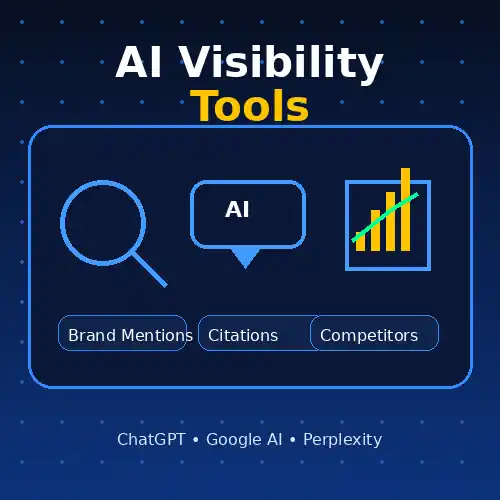
AI Visibility Tools are platforms that monitor how brands and websites appear in AI-generated answers across ChatGPT, Google AI, Perplexity, Gemini, and other supported platforms.
For example, let's say someone asks ChatGPT:
"What are the best SEO agencies for small businesses?"
Does your company appear? Which competitors are mentioned? And where does the AI get its information?
That's what these tools help you investigate.
The main metrics include:
- Brand Mentions: How often your business appears in AI answers.
- AI Share of Voice: Your visibility compared to competitors.
- Source Citations: Which websites AI engines reference.
- Prompt Tracking: Which questions trigger mentions of your business.
- Historical Visibility: How your results change over time.
Remember, being mentioned in an AI answer isn't the same as getting a link to your website.
Best AI Visibility Tools to Check
There are several platforms worth knowing:
- Ahrefs Brand Radar: Useful for researching brand mentions, competitors, prompts, and AI citations alongside traditional SEO data.
- Semrush AI Visibility: Combines AI visibility research with SEO and competitor analysis.
- Profound: Focuses on AI search analytics, citations, brand monitoring, and detailed reporting.
- Peec AI: Helps track prompts, brand mentions, and competitor visibility across supported AI engines.
- OtterlyAI: Focuses on recurring AI prompt monitoring, mentions, and citations.
Which one should you choose?
It depends on how many websites you're managing, which AI engines you want to monitor, and how much you're willing to spend.
How Much Do AI Visibility Tools Cost?
Prices vary depending on the platform, subscription, number of prompts, and supported AI engines.
Before choosing a tool, I would check how many prompts you can track, how often they're monitored, whether competitor analysis is included, and whether you can manage multiple clients.
Don't pay for hundreds of tracked prompts if you only need to monitor twenty important questions.
And always check the official pricing page before purchasing.
How Can You Improve Your AI Visibility?
Now let's say you've checked your AI visibility and discovered that competitors appear in answers where your brand is missing.
What should you do?
My first recommendation is simple: check your existing website content before writing anything new.
Maybe you already have an article covering the topic, but it's outdated.
Maybe your website doesn't answer the question clearly enough.
Or maybe your competitors appear in industry publications that AI engines cite.
I would start by:
- Checking which questions competitors appear in.
- Reviewing existing articles before creating new ones.
- Improving content, examples, and internal links.
- Checking the sources AI engines cite.
- Making sure the website is technically accessible.
- Monitoring changes over time.
And one more thing.
Don't start buying random backlinks just because a website appears in an AI citation report.
A citation doesn't guarantee that getting a link from the same website will make ChatGPT recommend your business.
Common Mistakes When Tracking AI Visibility
- Checking one ChatGPT answer and assuming everyone sees the same result.
- Tracking only questions containing your brand name.
- Confusing brand mentions with website citations.
- Trusting an AI Visibility Score without understanding how it's calculated.
- Publishing more articles without checking existing content.
- Assuming increased AI visibility automatically means more customers.
AI-generated answers can change depending on the model, location, prompt, and other factors.
That's why I prefer looking at trends rather than one isolated result.
Frequently Asked Questions
What is the best AI Visibility Tool?
There's no single best option. Ahrefs, Semrush, Profound, Peec AI, and OtterlyAI offer different features. Choose according to your needs and budget.
Can I track my brand in ChatGPT?
Yes. AI visibility platforms can monitor selected prompts and identify when your brand appears. They cannot see every private ChatGPT conversation.
Do AI Visibility Tools improve rankings?
No. They help identify opportunities, but they don't control AI-generated answers.
Can I improve AI visibility without paid tools?
Yes. You can start with manual research, existing analytics, and improving your website content.
Final Thoughts
AI Visibility Tools are becoming an important part of SEO, but I wouldn't recommend buying one just because everyone is talking about AI.
First, understand what you want to measure.
Do you want to know if ChatGPT recommends your business? Which competitors appear? Or which sources AI engines cite?
Once you understand that, choosing a tool becomes much easier.
At the end of the day, the goal isn't just to appear in AI-generated answers. It's to help the right people find your business and become customers.
Tsahi Sason
TZD-SEO