
Organic Traffic and Google Rankings Dropped? Here’s Why It Happens and What to Do
A drop in organic traffic can be stressful, especially when your website has been ranking well for months or even years.
But the first thing I want to tell you is simple:
Don’t panic.
A decline in SEO traffic or Google rankings does not always mean that something is seriously wrong with your website.
Sometimes rankings move because of a Google algorithm update. Sometimes a technical change created a problem. Sometimes your competitors simply improved their websites and moved ahead of you.
And today, we also need to think about GEO.
Visibility can change not only in Google Search, but also in AI platforms such as ChatGPT, Gemini and other answer engines.
So if your organic traffic or rankings suddenly dropped, the first step is not making random changes.
The first step is understanding why it happened.
What Do I Check First When Organic Traffic Drops?
When I see a drop in organic traffic, I usually don’t panic.
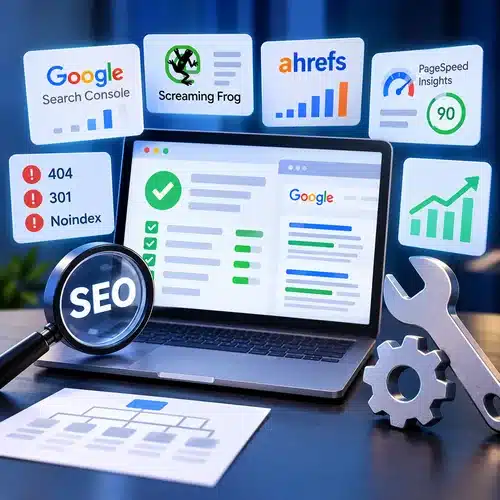
The first place I go is Google Search Console.
Search Console gives us a huge amount of information about what is happening with the website.
I check:
- Clicks.
- Impressions.
- Average positions.
- Pages that lost traffic.
- Queries that lost visibility.
- Indexing problems.
- Technical errors.
After that, I check keyword positions using tools such as Ahrefs, Ubersuggest or Semrush.
I want to understand whether the traffic dropped because rankings actually went down, or whether something else changed.
I also check whether Google released an algorithm update around the same time.
Another important question is:
What changed on the website recently?
Was the website redesigned?
Was a new theme installed?
Did the developer change the website structure?
Did someone change URLs?
Was a new plugin installed?
Sometimes a website loses traffic simply because someone made a technical change without realizing the SEO impact.
Main Reasons Organic Traffic and Rankings Drop
In my experience, one of the most common reasons for ranking fluctuations is a Google algorithm update.
Google regularly changes and improves its systems.
Core Updates, Spam Updates and other changes can cause rankings to move significantly.
Some websites benefit.
Other websites lose positions.
There are also many cases where the problem is technical.
A developer can make a mistake.
A designer can change something important.
Even the SEO professional can make a mistake.
Sometimes one small technical change can create a much bigger SEO problem.
And then we have the more serious situations, such as a manual action from Google.
That is where I start paying much more attention.
Recovering from a serious Google action can be much harder than recovering from a normal ranking fluctuation.
That is why I always say:
Do things properly. Follow the rules.
| Reason | What Can Happen? | What Should You Check? |
|---|---|---|
| Google Algorithm Update | Rankings can become unstable and traffic can drop. | Check for Core Updates, Spam Updates and other major Google changes. |
| Technical SEO Problem | Pages may disappear from the index or lose rankings. | Check Search Console, Noindex tags, redirects, plugins and recent technical changes. |
| Website Redesign or Migration | URLs, internal links and site structure may change. | Check redirects, sitemap, indexing and internal links. |
| Low-Quality or Unnatural Links | The backlink profile may create trust or quality problems. | Review your backlinks and the quality of websites linking to you. |
| Website Neglect | Competitors continue improving while your website stays the same. | Review content, schema, links and technical SEO. |
| Google Manual Action | Visibility can drop significantly. | Check Manual Actions and Security Issues inside Google Search Console. |
Is the Traffic Drop Temporary or a Real SEO Problem?
This is one of the most important questions.
Sometimes the drop is temporary.
During a Google update, rankings can become very unstable.
You can be number one today and number six tomorrow.
Then, a week or two later, you may be back near the top.
That happens.
It does not automatically mean you destroyed the website.
When I see this type of movement, I check the website, but I usually don’t start changing everything immediately.
Sometimes you need to give Google time.
A week.
Two weeks.
Sometimes even three weeks.
I call these minor drops.
Even moving from position one to position five can still be a relatively minor problem if the rest of the website is healthy.
That is completely different from finding a Noindex tag on important pages or discovering a serious indexing problem.
Technical problems need to be treated differently.
If the website migration was handled incorrectly, a redirect was removed or someone accidentally blocked important pages, then we need to fix the problem.
Once the issue is corrected, rankings can gradually recover.
Sometimes the answer is not complicated.
It is simply:
Fix the problem correctly and be patient.
How Google Algorithm Updates Affect Rankings
Google updates can create a lot of movement.
Core Updates and Spam Updates can make rankings much less stable for a period of time.
Some websites gain visibility.
They move up.
They get more traffic.
They suddenly appear for more searches.
Other websites lose positions.
Even websites that have been sitting comfortably in the top three can move down.
It has happened to my websites.
It has happened to clients.
That is SEO.
The important thing is not to treat every decline as the end of the world.
There is usually work that can be done.
Review the website.
Understand what changed.
Compare yourself to the websites that gained rankings.
Improve what needs improvement.
Then continue.
How Do I Recover Organic Traffic After a Drop?
When organic traffic drops, I normally start with a complete review of the website.
I check what happened before the decline.
I check recent Google updates.
I check technical changes.
I check rankings.
I check backlinks.
I check the content.
The goal is to understand the cause before trying to fix the result.
Sometimes website speed is part of the problem.
Sometimes the backlink profile is weaker than it used to be.
Sometimes activity looks unnatural.
And sometimes the website simply hasn’t been updated in a long time.
A lot of businesses get comfortable.
They rank at the top of Google for years and stop working on the website.
Meanwhile, competitors are publishing better content, improving their pages, building authority and fixing technical issues.
Eventually, they catch up.
And sometimes they pass you.
Review the Pages That Lost Traffic
I start by checking which pages actually lost visibility.
You don’t want to look only at total website traffic.
Maybe one important page lost 50% of its traffic while the rest of the website stayed stable.
Maybe an entire category dropped.
Maybe only one group of keywords was affected.
I want to understand exactly where the decline happened.
Check Google Search Console
Search Console is one of the most important tools in this situation.
Compare periods.
Look at clicks.
Look at impressions.
Look at queries.
Look at pages.
Check whether the decline started on a specific date.
If traffic suddenly dropped on the same day as a technical change or Google update, that gives us a direction.
Check Your Keyword Rankings
I also use tools like Ahrefs, Ubersuggest or Semrush.
I want to see which keywords moved.
Maybe a keyword went from number two to number eight.
Maybe another one disappeared from the top 100.
These are completely different situations and usually require different solutions.
Improve Existing Content
A lot of the time, I improve existing content.
I update it.
I add new information.
I answer more questions.
I make sure the article is still relevant.
Content that ranked three years ago is not automatically the best answer today.
The search results changed.
The competitors changed.
The questions people ask changed.
Your content needs to keep improving too.
Review Your Backlinks
I check the backlinks the website already has.
Did important links disappear?
Did the website suddenly receive a lot of low-quality links?
Does the backlink activity look natural?
If I need to build new links, I do it carefully.
The goal is not just to create more links.
The goal is to create the right links.
Perform a Technical SEO Audit
I also perform a technical review.
I check:
- Indexing.
- Noindex tags.
- Redirects.
- XML sitemap.
- Internal links.
- Website speed.
- Plugins.
- Recent development changes.
- Broken pages.
- Changes to URLs.
If a technical issue caused the drop, fixing it correctly can help rankings recover over time.
| Step | What I Check |
|---|---|
| Google Search Console | Clicks, impressions, rankings, pages, indexing and technical issues. |
| Keyword Tracking | Ahrefs, Ubersuggest or Semrush to see which keywords lost positions. |
| Google Updates | Whether a Core Update, Spam Update or another major update happened. |
| Content | Update old pages, add useful information and answer search intent better. |
| Backlinks | Check lost links, weak links and activity that may look unnatural. |
| Technical SEO | Check indexing, redirects, Noindex, sitemap, speed and plugins. |
Sometimes the Problem Is Simply That You Stopped Working
This happens more than people think.
A website reaches the first page.
The business owner is happy.
The SEO work slows down.
The content stops getting updated.
New articles stop being published.
Technical improvements stop.
Backlinks stop.
But the competitors did not stop.
They are still working.
They are improving their content.
They are publishing new pages.
They are improving their websites.
They are building authority.
Eventually, Google may decide that another website now deserves the position more than yours.
SEO is not something you finish.
If the market is competitive, you need to keep working.
How Can You Reduce the Risk of Losing Organic Traffic?
Let me tell you straight.
There are things we can do.
Keep the website updated.
Update the content.
Do things that are outside the box.
Improve schema markup.
Follow Google updates.
Fix technical problems when they appear.
Keep improving the website.
But sometimes ranking drops are unavoidable.
Sometimes a new competitor appears and suddenly Google gives them more visibility.
I have seen websites overtake me and then, a month or two later, disappear again.
It happens.
Rankings are not always stable.
That is why I always say:
Focus on your website.
Do your work.
Improve your content.
Answer real questions.
Give people real value.
And don’t fill the website with AI-generated content just because you can generate 100 articles in one day.
AI can help.
But content still needs to be useful.
What Should You Avoid When Rankings Drop?
Don’t panic.
Don’t redesign the entire website because rankings moved for five days.
Don’t delete pages without checking them.
Don’t change URLs without redirects.
Don’t migrate the website without a plan.
Don’t start removing backlinks randomly.
Don’t publish hundreds of AI pages with no real value.
And don’t give up after one bad week.
Sometimes rankings need time to stabilize.
Organic Traffic Drops and GEO
Today, I don’t look only at SEO.
I also look at GEO.
With SEO, we look at things such as Google rankings, impressions, clicks and organic traffic.
With GEO, we also want to know whether the business continues to appear inside AI answer engines.
That includes platforms such as ChatGPT, Gemini and other AI systems.
Visibility in AI can also change.
The sources used by AI engines can change.
Competitors can become stronger.
Your content can become outdated.
That is why the same basic principle still applies.
Keep the website updated.
Build authority.
Create content that actually answers questions.
Make it clear who is behind the business and the content.
Build trust.
A strong SEO foundation can also support your GEO strategy.
If you want to learn more about organic search, you can also visit my complete guide to SEO and organic website promotion.
My Advice When Your Rankings Drop
The most important thing I want you to remember is this:
If you are investing in SEO, don’t let every ranking drop scare you.
Sometimes it is temporary.
Keep working.
Keep improving the website.
Don’t give up.
If the decline continues for a long time, then investigate.
Talk to the person managing your SEO.
Maybe something is wrong.
Maybe the work isn’t being done correctly.
Or maybe Google is simply in the middle of an update.
Sometimes you wait one week, two weeks or three weeks, and suddenly the rankings start moving up again.
I know seeing organic traffic drop is stressful.
But sometimes that is part of SEO.
Be patient.
Work properly.
Keep improving your content.
Follow the rules.
And focus on building a website that deserves to rank.
Listen to a wise Kurdish guy like me.
Good luck.
Disclaimer
The information in this article is provided for educational and informational purposes only.
Every website is different, and every organic traffic or ranking decline should be reviewed individually.
Before making major changes to URLs, plugins, content, backlinks, redirects, website structure or indexing settings, create a backup and consult a qualified professional.
There is no guarantee that rankings or organic traffic will return to previous levels, and changes made without proper analysis can sometimes cause additional problems.